Meet Artist Oleksandra
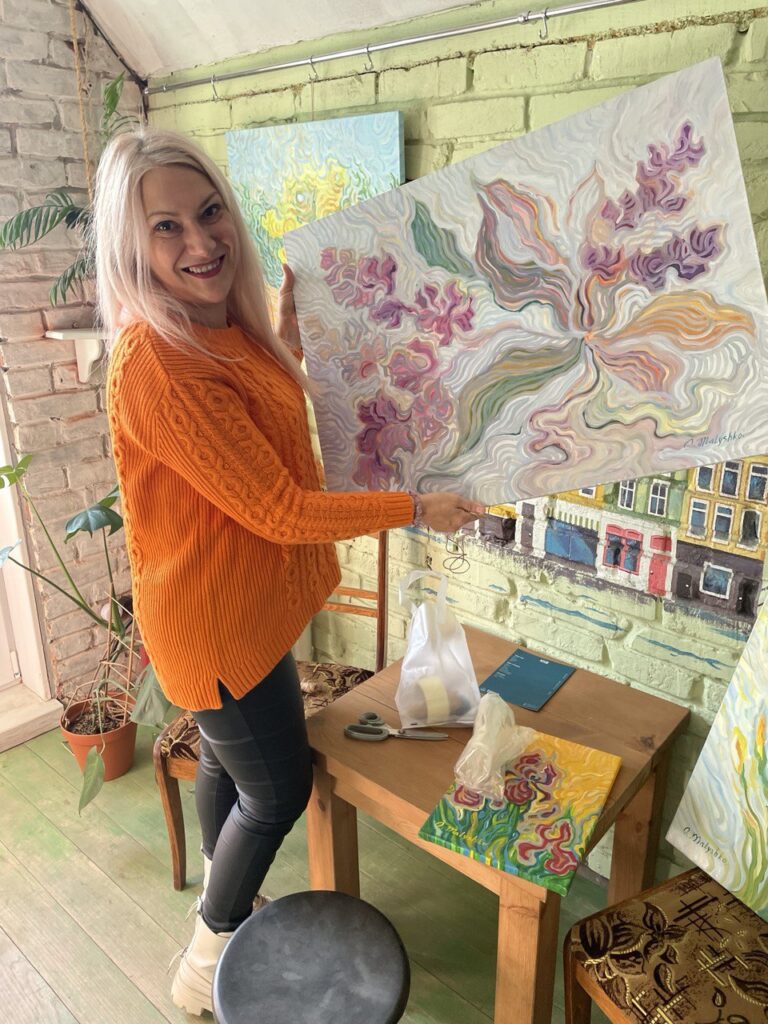
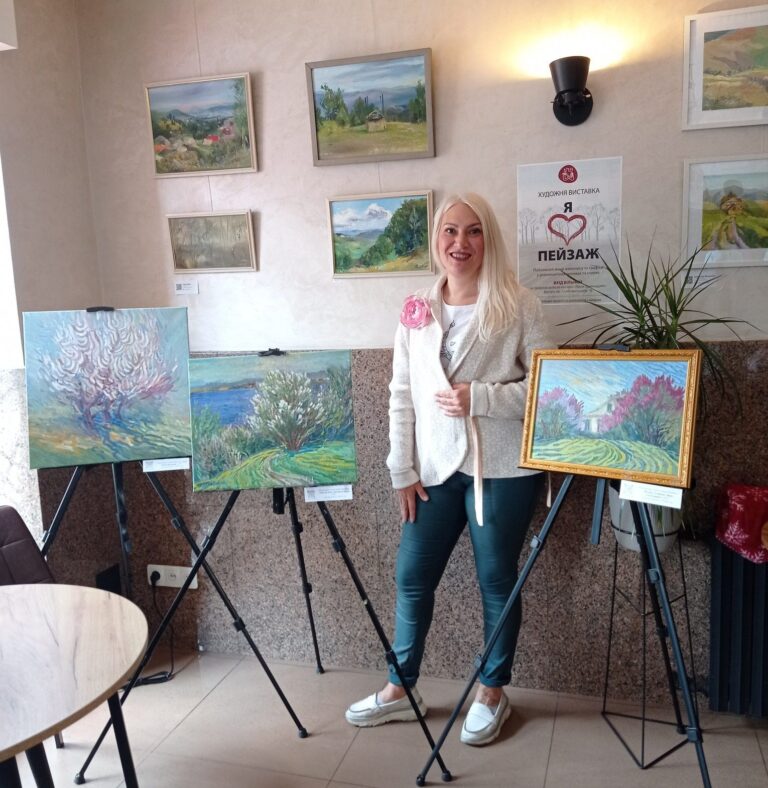
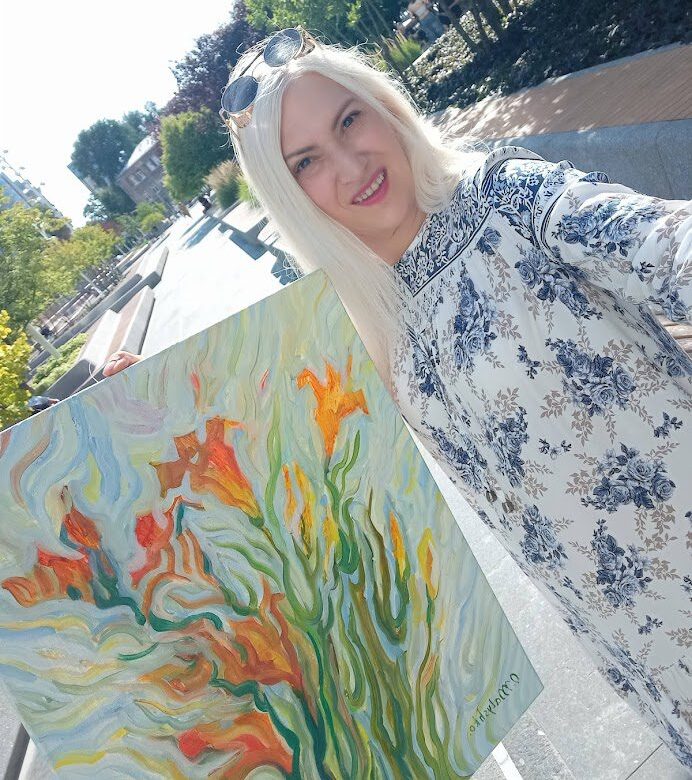
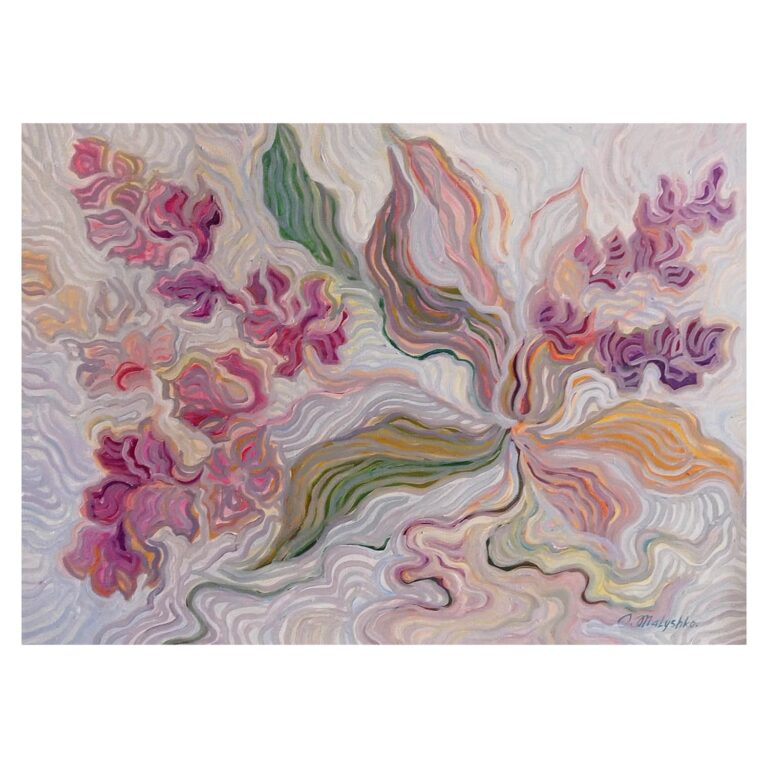
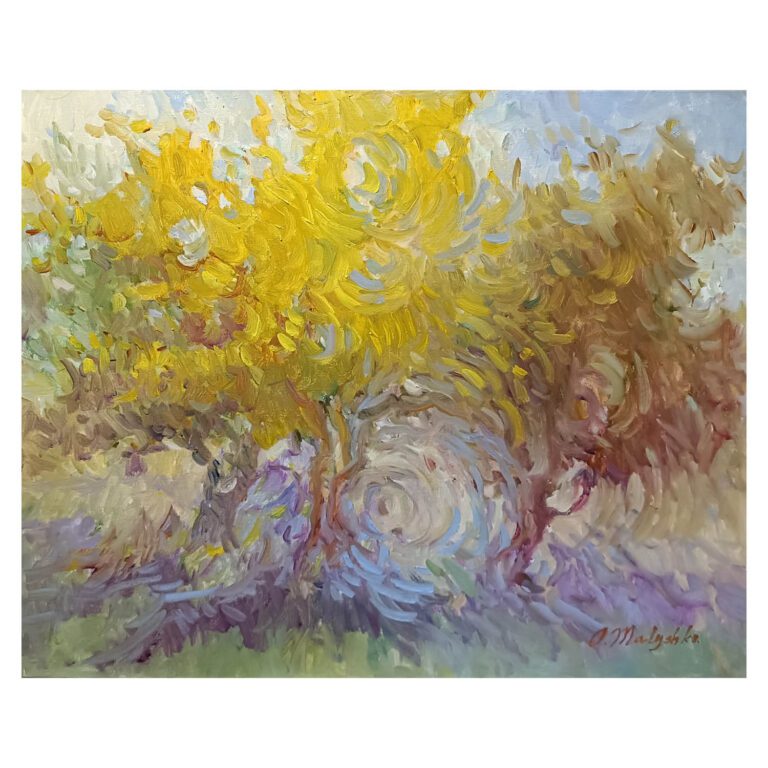
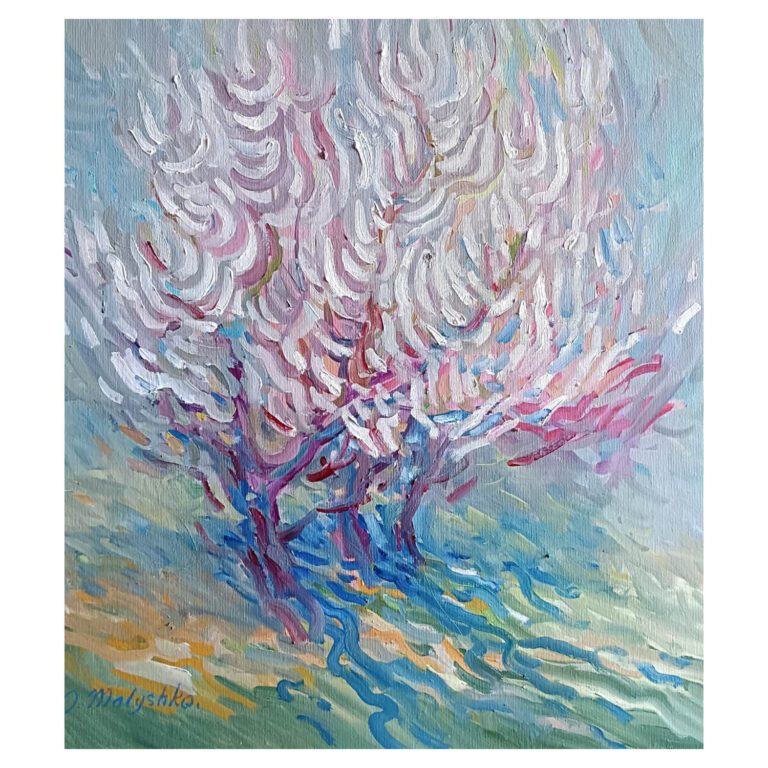
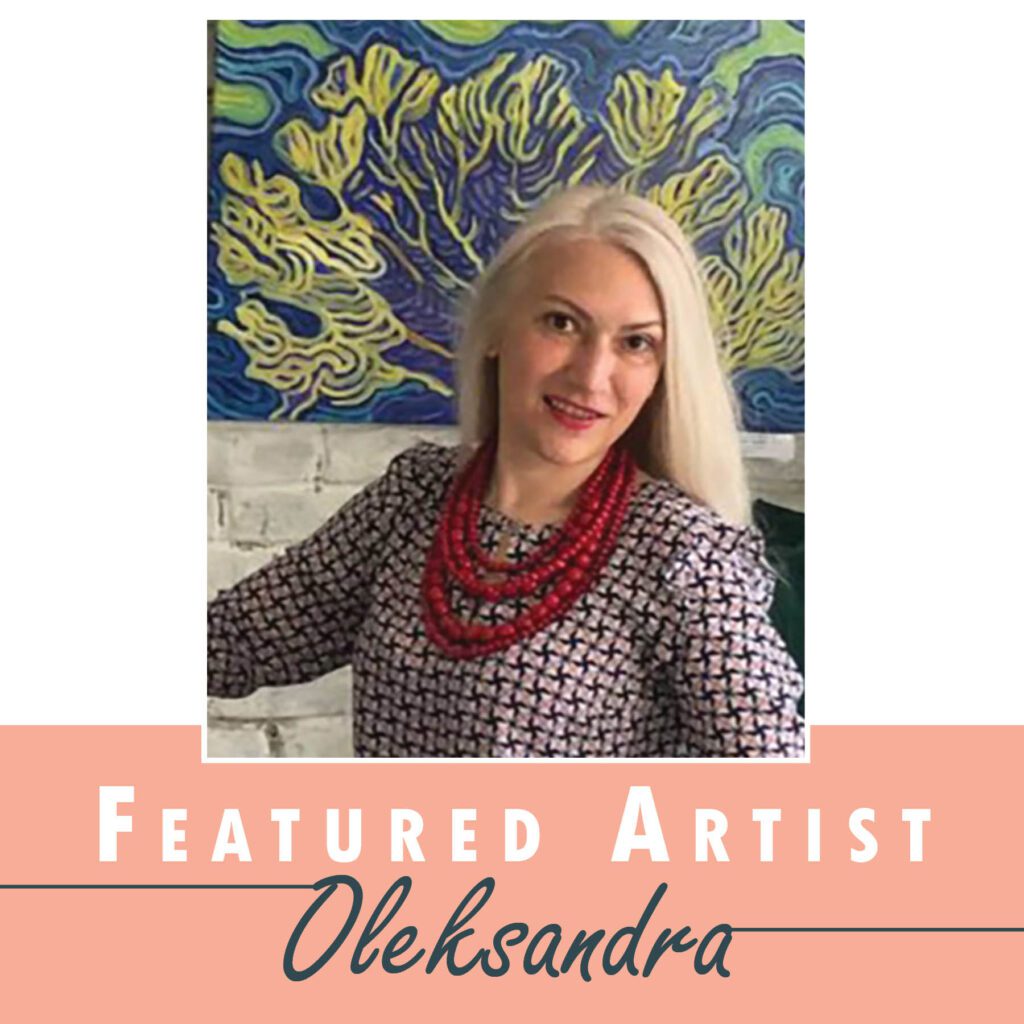
Oleksandra Malyshko is a Ukrainian landscape impressionist artist from Dnipro. Her path started in architecture, which gave her a sense of structure and rhythm. But today, when she paints, her main goal is simply to catch a fleeting moment of life, its movement, and its flow. For Oleksandra, life is as short as a gust of wind, so she sees her artwork as “letters to the future” — a way to talk to strangers and start a quiet dialogue between the canvas and the viewer.
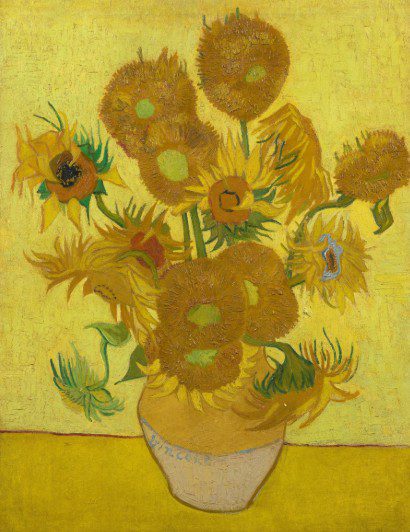
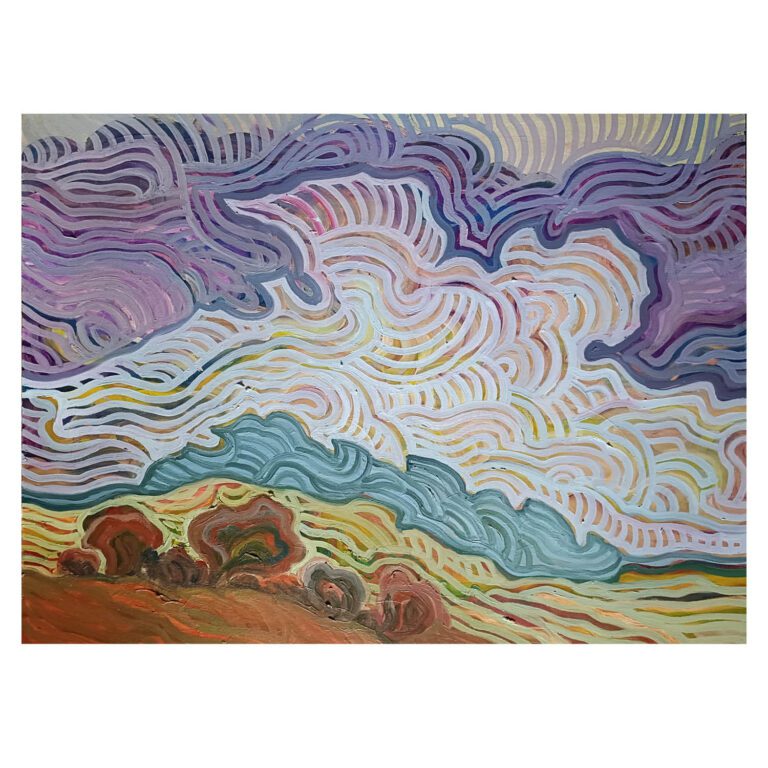
Lines and colors are her main tools for communication, often connecting different senses through her art. Sometimes she tries to paint the sound of the wind catching autumn leaves and lifting them up in a gentle dance. Other times, she captures a melody drifting across the steppe or a wide landscape that unfolds like a warm flame. Living in Ukraine today, Oleksandra chooses not to paint literal images of explosions or war. Instead, she processes the reality around her through her intense use of red and fiery tones. This vibrant color and movement are her personal way of living through the state of war as an artist, finding life and energy amid the darkness. Friends call her the “Ukrainian Van Gogh” because her paintings feature so much nature and personal reflection.
Oleksandra shares her art through exhibitions worldwide. While she is known for her oil landscapes, her graphic works are also held in international collections, including Gallery Kanon in Tokyo, Silpakorn University in Thailand, and the Mikołaj Rej Public Library in Poland. She enjoys staying connected to her community by hosting art workshops, donating paintings to charities, and being an active member of the National Union of Artists of Ukraine and the International Association of Artists of the European Union (IAA). Her art can be found in public and private collections across the U.S., Ukraine, Poland, and Israel.
A statement from Oleksandra…
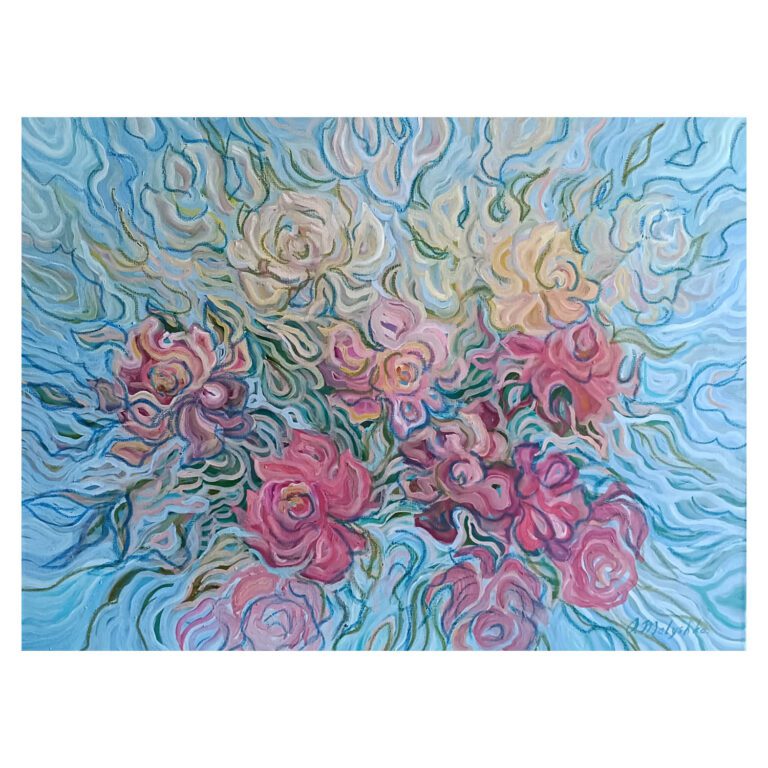
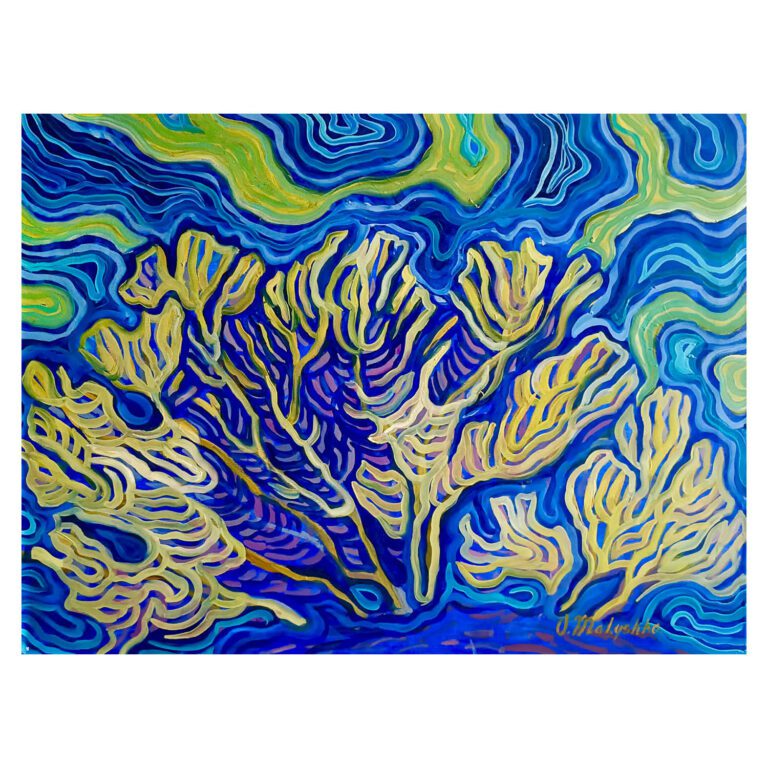
My artistic style, which I define as linear impressionism, focuses on the intersection of structured lines and vibrant, expressive brushstrokes. This technique allows me to capture the fleeting energy of Ukrainian landscapes while exploring the emotional depth of contemporary life.
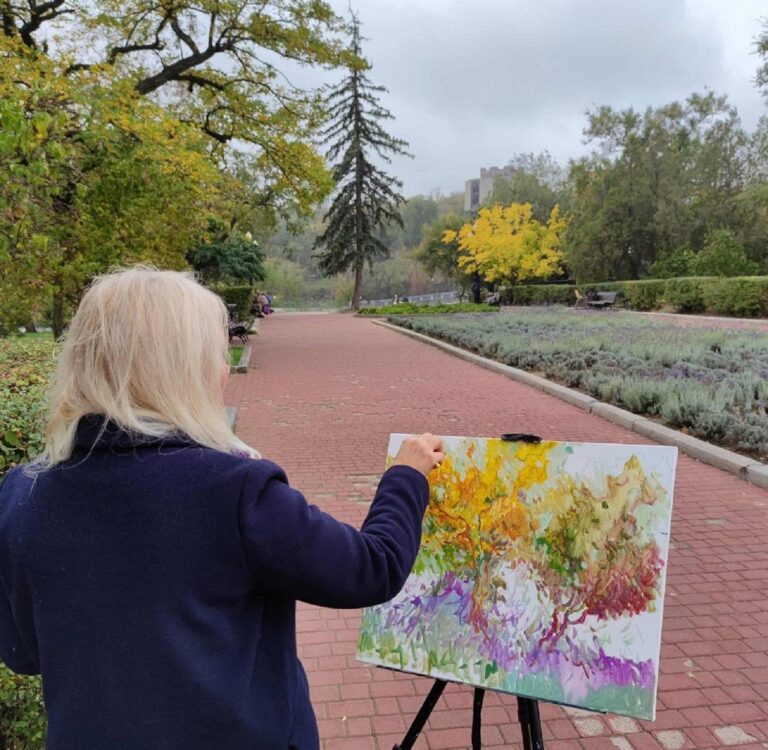
In my work, I navigate the fragile boundary between external chaos and internal peace. My plein air paintings—often created during blackouts and moments of wartime uncertainty—transform tension into lyrical, sensitive visual narratives.
For me, art is a profound exploration of both me and the space I inhabit. Living in a frontline zone, the struggle to preserve one’s humanity is constant. Frequent air raids and power outages strip life down to basic survival; in such conditions, it is easy to lose touch with compassion and culture.
Painting is where I find healing. During warmer months, I immerse myself in nature through plein air sessions to reclaim my soul and my senses. In winter, I work in the warmth of my home, creating reflective pieces that delve into my inner world.
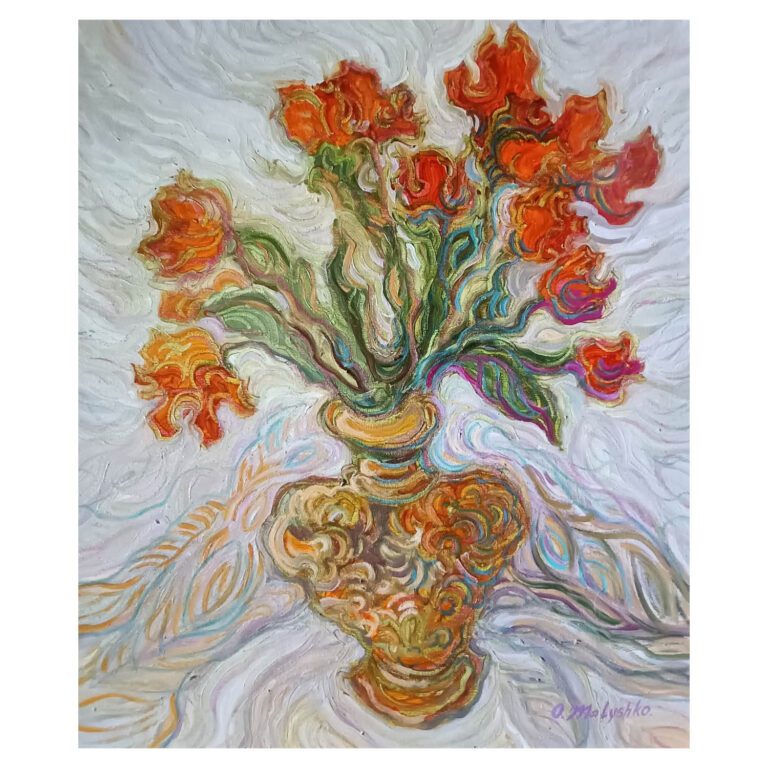
I view my paintings as letters to the future—my personal testimony of the struggle to remain human amidst war. A recurring element in my work is the color red; it is like a flame I cannot escape. I find myself constantly compelled to tell its story, whether I am depicting a complex emotional state or a simple bouquet of flowers.
Artist Interview – Oleksandra
In this artist interview, Ukrainian landscape painter Oleksandra Malyshko shares how she uses linear impressionism and plein air painting to document life, resilience, and beauty during wartime. Discover how her expressive oil paintings transform the Ukrainian landscape into powerful stories of hope, healing, and humanity.
“What was your most challenging piece and why?”
The hardest part was finding my place as an artist during the war; for me, it was a process of death and rebirth. It all began in the early hours of a February morning in 2022. I hadn’t slept; my Siamese cat sensed the imminent disaster, biting my fingers all night to keep me awake. When the explosions started, I exhaled from sheer tension. We had no idea what to do, so relatives took my daughter and me to the suburbs. The explosions were constant, and we were terrified to even close our eyes.
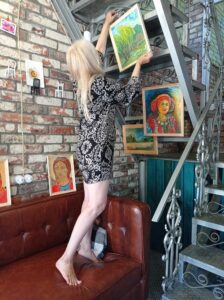
That first month was a blur. I remember returning to my city apartment, where a friend and I frantically tore my paintings from their wooden frames, rolling dozens of canvases into tight bundles to mail them abroad for safety. Some pieces were lost or ruined in the haste. I took what paints and fabric I could, and back in the suburbs, I spent long hours sizing, priming, and drying them.
At that moment, I felt I might never paint again. We hid in a pit in the garage, scouting manholes and trenches for cover as the troops drew closer.
Yet, eventually, I began to create once more. My first work was the ‘Angel with a Red Wing.’ It is hard to explain why this image appeared, but we all reach for something greater than ourselves, investing it with divine qualities just to stay sane. Today, that painting is in a private collection in the USA. Its owner likely has no idea how vital that piece was to me, or the harrowing conditions under which it was born in a distant, war-torn Ukraine.
“How do you align with The Art Spread’s mission of transforming lives through art?”
Art holds immense power, both for those who immerse themselves in the act of creation and for those who behold it. In our world, there is a belief that an artist bears responsibility for what they bring forth into the viewer’s realm. We choose which path to take and what to depict; we decide whether our creation will carry a message of joy or one of pain.
At the same time, creativity possesses a profound therapeutic quality. I believe that for many, it can become a sanctuary—a place to find solace, relief, and a community of like-minded souls. It is a space where one can rediscover hope and connect with others through the shared language of beauty.
“What message do you convey in your work?”
During those times, the lack of sleep severely impacted our mental state. Many neighbors locked themselves inside their homes and never came out. Occasionally, through the silence of the night, you could hear the haunting sound of doors opening and closing. It felt as if we were all losing our minds; a collective descent into madness. Many things that once felt important suddenly lost all meaning. I realized that only instincts remained—primal reactions to the sound of explosions, air-raid sirens, and any sign of danger. Even in brief moments of sleep, I would bolt awake, dressing and running to the shelter with my family.
We became like animals—silent, driven only by the need to survive. We watched the news incessantly, which only deepened the terror. It was then that I clearly understood: without a soul, we are merely creatures trying to endure. Since that time, I have embarked on my own journey of recovery, searching for my lost Soul. I began to paint, and it became my salvation.
My message aligns with the idea that art is what separates us from the animal kingdom in our evolution. It elevates us toward something more ideal than we are—perhaps toward the Angels. I am not the first to hold this belief, but through my experience, I have found it to be my ultimate truth.
“What emotions are expressed in your work?”
In my paintings, every viewer sees something personal; a turbulent landscape might immerse them in memories or evoke a long-forgotten, yet familiar melody from childhood.
Capturing the reflection of life is the ultimate goal of my work. I do not strive for photographic likeness; instead, each time I try to uncover a new facet or image to show the world in a different light. I seek to explain love, beauty, and the transience of life, no matter what obstacles stand in the way.
“Who is your favorite iconic artist?”
Gogh and Oleksandr Samiilenko. To me, these artists, like no others, captured the transience of life and the beauty of a fleeting moment. Their influence fueled my own desire to breathe dynamism into my canvases. I have always sought to answer a silent question: how to paint the breath of the wind, the way a melody drifts across a river, or the magic of a fairy tale told by a grandfather to his grandchildren?
My goal has always been to weave the dialectics of a nation into a landscape—to capture the melodiousness of our language, the sincerity and kindness of our people, the radiance of the Soul, and our ancient legends. I wanted to translate these intangible things into color and form.
During the war, my search deepened. I began studying the biographies of artists who endured such trials, seeking to understand how their art and worldview survived and transformed. Through extensive reading, correspondence with artists’ descendants, and exchanging thoughts with painters whose styles resonate with mine, I searched for my own path. I was drawn to their message and their reflections on the artist’s role in a society at war. There are many such voices—far more than ten.
Years will pass, everything will change, and much may be forgotten, but perhaps these paintings will remain—preserving the spirit of what cannot be put into words.
“What do you want the Art Spread community to take away from your work?”
My main message to the community is this: Do not postpone your artistic ideas. Their time is right now, for tomorrow the world will change, and they may lose their relevance. So paint, sing, connect—Live, and bring your plans to life. Look up at the sky: the clouds above drift by so quickly, and so does our life. Every one of my paintings is a capture of that fleeting moment.
“How can we support you?”
Thank you for this question. For me as an artist, the ability to connect with like-minded souls and creative individuals from the other side of the planet via the internet is already a significant advantage and a world of opportunity. My goal is not simply to offer my paintings for sale, but to find collectors who truly resonate with my style and vision.
Make a difference to our artists with your tax-deductible purchase and collect Oleksandra’s art today: